Dale Carnegie: The Original Master of Human Relations

Long before the personal development industry was formalized into a movement, one man quietly laid the foundation for what would become one of the most powerful and enduring coaching legacies in the modern world. That man was Dale Carnegie—a name that would become synonymous with communication mastery, people skills, and self-confidence.
Dale Carnegie didn’t teach people how to be rich, famous, or powerful. He taught something far more valuable: how to work with people, understand them, win them over, and transform everyday relationships into sources of trust, influence, and opportunity. In doing so, he became one of the greatest teachers the world has ever known.
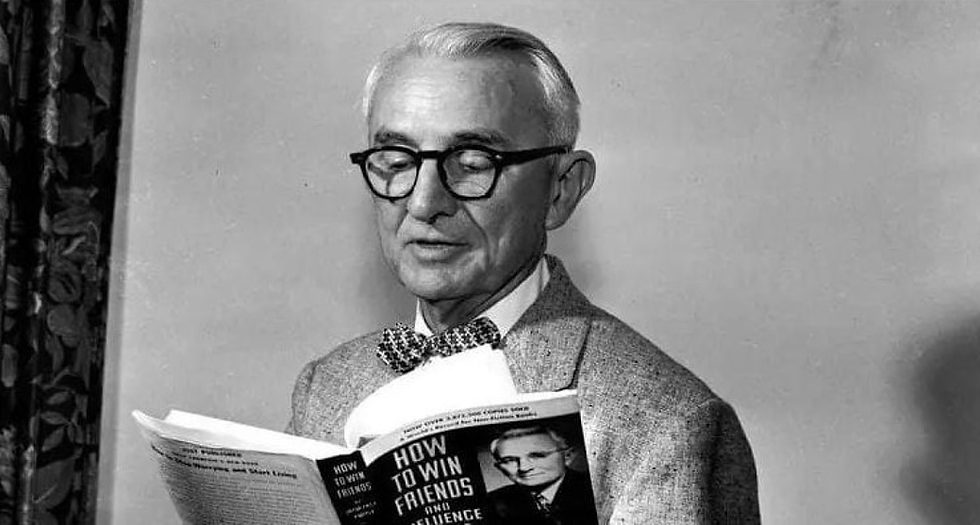
Carnegie was not a motivational speaker in the traditional sense. He was a teacher of timeless human principles—delivered not from a stage of hype, but from a place of deep understanding of what makes people tick. He was, and remains, the world’s first great coach of emotional intelligence, long before the term even existed.
From Farm to Fortune of Influence
Dale Carnegie was born in 1888 in Maryville, Missouri, on a humble farm where he spent his early years rising before dawn to milk cows. There was nothing glamorous about his upbringing. In fact, he often recounted the challenges of growing up poor, socially awkward, and filled with self-doubt.
But something inside him stirred even then—a yearning to connect, to be heard, and to matter in a world that often dismissed quiet, small-town voices. That desire would shape his destiny.
After attending State Teacher’s College in Warrensburg, Missouri, Carnegie tried his hand at sales. Selling correspondence courses to farmers and later bacon and soap for Armour & Company, he learned firsthand the difficulties and nuances of persuasion. It was in these trenches that he developed the earliest seeds of his life’s work: understanding people’s fears, motivations, and desires.
By 1912, he had begun teaching public speaking at the YMCA in New York. That night class, composed of working men and women terrified of speaking up, became the soil in which Carnegie planted the roots of something extraordinary. He didn’t teach these students from a textbook—he observed them. He asked them questions. He listened. And slowly, he developed a coaching system not based on theory, but on human behavior.
The Birth of a Philosophy
What made Dale Carnegie unique among early thought leaders was that he didn’t position himself as a guru. He didn’t preach from a pedestal. Instead, he stood beside his students—learners, strugglers, and seekers just like him—and offered practical, tested, deeply human advice.
In 1936, he published what would become one of the most influential books of all time: How to Win Friends and Influence People. It was an immediate and explosive success—not because it taught manipulative tactics, but because it validated something everyone had felt but never articulated: success in life and business wasn’t just about knowledge or talent. It was about people.
In the book, Carnegie didn’t speak about “techniques” in the cold, calculated sense. He talked about principles—like showing genuine interest in others, listening more than you speak, remembering people’s names, appreciating others sincerely, and admitting your own mistakes quickly. These weren’t gimmicks. They were invitations to elevate the way we treat one another.
The brilliance of his method lay in its warmth. Dale Carnegie didn’t aim to create dominating speakers or shrewd negotiators—he aimed to create better humans. And in that, he was ahead of his time.
Why He Was a True Coach—Not Just an Author
Dale Carnegie didn’t stop at writing. He created a coaching movement, founding the Dale Carnegie Training Institute—an organization that has since trained millions of individuals in over 100 countries. His programs, which focused on communication, public speaking, leadership, and interpersonal skills, were revolutionary in their structure.
Carnegie believed that coaching must be experiential. He insisted that students not just learn from books or lectures, but from doing—standing up, speaking, listening, connecting. His training rooms became laboratories for growth, courage, and transformation.
He knew that change didn’t happen in silence. It happened in moments of action—when a shy manager stood to give feedback for the first time, or when a young woman found her voice in a boardroom. Dale Carnegie's classrooms became the birthplace of boldness for thousands who had once shrunk into shadows.
He understood fear intimately. Not just fear of failure, but fear of rejection, fear of speaking, fear of being misunderstood. And he coached people through those fears with dignity, patience, and faith in their capacity.
The Power of Practical Principles
Carnegie’s teachings were not built on abstract motivation but on practical tools that people could apply immediately. He reminded people that success didn’t depend on charm, extroversion, or eloquence—it depended on presence, respect, and sincerity.
He often taught that, “You can make more friends in two months by becoming genuinely interested in other people than you can in two years by trying to get other people interested in you.” That quote remains a foundational truth in leadership, sales, and even marriage counseling today.
He understood that leadership wasn’t about control, but about influence. And influence began with trust.
His advice was startlingly simple: Don’t criticize. Give honest and sincere appreciation. Smile. Be a good listener. Talk in terms of the other person’s interests. Make the other person feel important—and do it sincerely.
To some, it may have sounded too simple to work. But to millions, it worked wonders. In a world that often overlooked the human soul in business or education, Dale Carnegie brought emotional intelligence to the forefront decades before it had a name.

His Enduring Quotes—Wisdom for the Ages
Throughout his life, Carnegie delivered thousands of speeches, coaching sessions, and public programs. He didn’t speak in slogans—he spoke in principles. And yet, many of his phrases have become guiding beacons for anyone who strives to connect more deeply, lead more consciously, and live more courageously.
Among his most celebrated quotes:
“It isn’t what you have or who you are or where you are or what you are doing that makes you happy or unhappy. It is what you think about it.”
“Most of the important things in the world have been accomplished by people who have kept on trying when there seemed to be no hope at all.”
“The royal road to a man’s heart is to talk to him about the things he treasures most.”
These weren’t just lines—they were invitations. Invitations to reflect, to slow down, to connect. And through these gentle prompts, Carnegie changed millions of conversations—and millions of lives.
Legacy of a Gentle Giant
Dale Carnegie passed away in 1955, but the waves of his work only grew stronger after his death. Today, Dale Carnegie Training operates in over 90 languages and continues to coach professionals, entrepreneurs, executives, and students alike.
What makes his legacy enduring is not the scale of his organization, but the depth of his message. He gave the world a map for how to work with people—not through power or persuasion, but through presence, empathy, and understanding.
His legacy lives in every courageous conversation between a manager and an employee. It lives in every nervous speaker who stands tall at a podium and finds their voice. It lives in every young person who realizes that being likable isn’t a trick—it’s a choice to care.
Dale Carnegie made the world more human. And in doing so, he made it more connected, more compassionate, and more courageous.
Why Dale Carnegie Will Forever Be a World Coaching Legend
The essence of coaching is to help others become more than they were before—to give them tools, frameworks, and belief systems that elevate their actions and outcomes. By that measure, Dale Carnegie stands as one of the greatest coaches the world has ever known.
He didn’t just coach individuals—he coached cultures. He didn’t just teach communication—he reshaped the way we relate to each other. He didn’t just train speakers—he awakened leaders.
Carnegie’s approach wasn’t about power. It was about people. Not about performance—but about presence. Not about status—but about sincerity.
In today’s world, where digital interactions often replace real connection, his voice becomes even more valuable. He reminds us that the most enduring influence we will ever have doesn’t come from what we say—but from how we make others feel.
Dale Carnegie will always be remembered not for commanding crowds, but for connecting with them. Not for dazzling with charisma, but for empowering with compassion. Not for preaching success, but for teaching humanity.
FAQs – Dale Carnegie: The Original Master of Human Relations
1. Who was Dale Carnegie? Dale Carnegie was a pioneering American author, speaker, and coach best known for revolutionizing the fields of communication, personal development, and leadership. He authored the globally influential book How to Win Friends and Influence People and founded Dale Carnegie Training, which continues to impact professionals around the world today.
2. What is Dale Carnegie most known for? Dale Carnegie is most known for teaching people how to communicate effectively, build meaningful relationships, and influence others with integrity and empathy. His work emphasized self-improvement through understanding human nature, and he remains a cornerstone figure in business, leadership, and life coaching.
3. What did Dale Carnegie teach? Carnegie taught practical principles of human connection—like listening actively, appreciating others sincerely, handling criticism constructively, and leading with empathy. He believed that success in life and business is deeply tied to our ability to connect with people authentically.
4. Is How to Win Friends and Influence People still relevant today? Yes, the book is widely considered timeless. Its core lessons on communication, emotional intelligence, and persuasion are still used by leaders, entrepreneurs, coaches, and educators globally. The principles remain applicable across generations and cultures.
5. Did Dale Carnegie create a coaching organization? Yes, he founded Dale Carnegie Training, a global network of training centers dedicated to coaching individuals and teams in leadership, public speaking, customer service, and personal effectiveness. The organization operates in over 90 countries and has coached millions of professionals.
6. What are some of Dale Carnegie’s most famous quotes? Some of his most memorable quotes include:
“You can make more friends in two months by becoming interested in other people than in two years by trying to get other people interested in you.”
“It isn’t what you have or who you are or where you are or what you are doing that makes you happy or unhappy. It is what you think about it.”
“The only way to get the best of an argument is to avoid it.”
7. How did Dale Carnegie influence modern coaching? Carnegie was one of the first to coach people on communication, self-confidence, and leadership as teachable skills. His influence laid the foundation for modern coaching models that focus on emotional intelligence, relational trust, and transformational leadership.
8. Who did Dale Carnegie coach or influence? Carnegie coached professionals from all walks of life, from salespeople and executives to public servants and students. While he didn’t coach celebrities in the traditional sense, his teachings shaped countless leaders and influencers globally, directly and through his training programs.
9. Is Dale Carnegie’s work still being taught? Yes. Dale Carnegie Training continues to offer programs in public speaking, people management, leadership, and interpersonal skills. His principles are also taught in business schools, coaching institutions, and leadership seminars around the world.
10. Why is Dale Carnegie considered a World Coaching Legend? Dale Carnegie is considered a legend because he didn’t just teach techniques—he taught timeless human principles. His work helped millions improve their confidence, relationships, and ability to lead with empathy, making him one of the most influential coaches in history.


Comments